The National Geographic magazine is not the first place you would think of as having anything related to modern history or politics. However, you would be mistaken – there is a large History and Culture section of the magazine. In the May issue, there is a detailed summary of Operation Paperclip, which began in 1945.
Operation Paperclip was a covert mission, initiated and organised by US intelligence, to secretly transport and settle numerous German rocket scientists in the United States. These scientists, heavily involved in the military programmes of Nazi Germany, worked in the American space and military industries.
Their membership of the SS, their use of forced labour in concentration camps, was quietly swept under the carpet. The name Paperclip came from an identifiable paper clip earmarking the files examining these scientists.

One of the most famous of these German scientists was Wernher von Braun, (1912 – 1977) an engineer and rocket scientist who led the creation of the so-called V-2 ballistic missile. This ‘vengeance weapon’ was used to target British cities in the last years of the war. Slave labourers from concentration camps, built to accommodate the needs of the rocket program, died in their thousands from overwork, starvation and disease.
In a cruel irony, more people died extracting the raw materials required for building these rockets than the civilians killed in Britain due to V-2 attacks. Braun’s passion for ballistic missiles helped fuel the space ambitions of NASA.
You may find more details about the specifics of this operation here.
This year marks the 80th anniversary of the end of World War 2. Numerous commemorative activities, presentations and ceremonies were held across the world. One of the most important of these was the May 9 Victory Day parade in Moscow. Multiple heads of state attended the parade on that day, marking the decisive contribution of the USSR in the defeat of Nazi Germany.
Other writers have examined in great detail the incredible sacrifices of the Soviet people, including 300 000 Armenians, in breaking the back of the Nazi war machine. I will not go into the details of the extraordinary and heroic efforts of the Red Army here. What I can anticipate though, is the screaming objection by Western commentators, indoctrinated in the Hollywood-Longest Day-Guns of Navarone-Saving Private Ryan fan club version of history – what about the Western contribution to the Nazi defeat?
This question is important, though it is deployed in a cynical fashion. It is not asked out of genuine interest in the Anglo-American-Canadian contribution to the war effort, but to distract us from the complicity of imperialist powers in accommodating and encouraging the rise of Nazi power.
Large corporations in the United States and Britain, while wary of Nazi designs on Western Europe, were definitely encouraging Hitler to build a German empire in the European east – a project involving the invasion of the Soviet Union. Hitler himself made no secret of the fact that Eastern Europe constituted German lebensraum (living space), in much the same fashion that white settlers in the United States expanded West. The tactics used to expel the indigenous people of the American West were adapted by Nazi Germany to exterminate the Slavs and Jews of the European East.
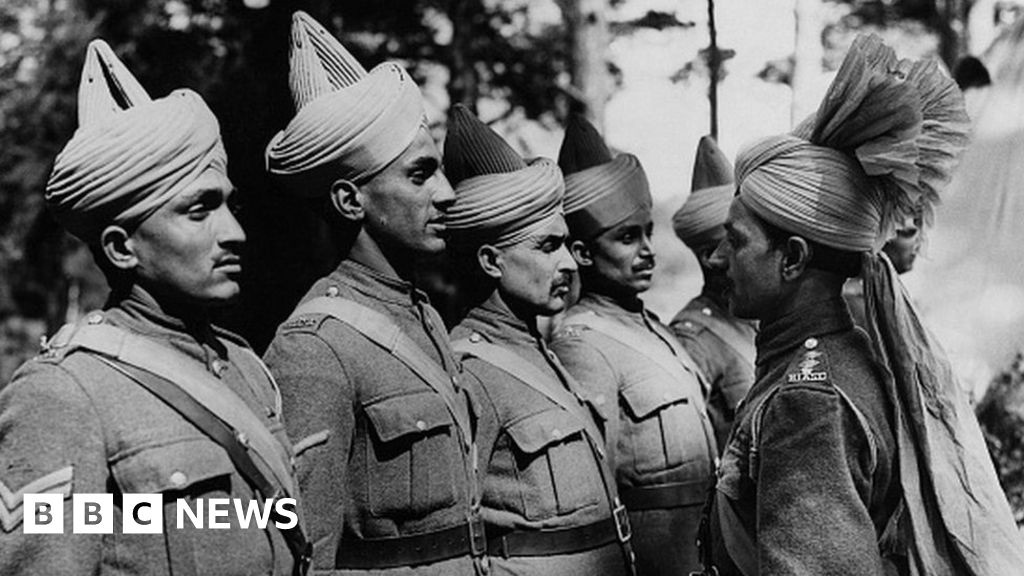
What about Britain’s undeniable effort to defeat Nazi Germany? There is no question regarding the courage and determination of the English people facing the Nazi blitz, but they were hardly standing alone. Gary Younge, sociology professor at the University of Manchester, writes that millions of nonwhite people from the far flung territories of the British empire, volunteered to fight for Britain.
Millions from India, (and the Indian subcontinent), sub-Saharan Africa, Jamaica, the Caribbean nations, Kenya, North African Arab-speaking nationalities – the British fight against fascism was multicultural. They have never received their VE Day, and their contribution has been written out of the history books.
While Europeans were ecstatically celebrating their newly-won freedom on VE Day 1945, another scenario unfolded in the former French colony of Algeria. France had been occupied by Nazi Germany, and it had signed, along with the other Allied powers, the Atlantic Charter, a document that stipulated that occupied nations in Europe had the right to self-determination.
Well, the Algerians for one, decided that the principle of self-determination applies to them. Protesting peacefully, they were met with French gunfire. 45 000 Algerian were killed over the course of May and June. The French army, backed up by armed French settlers, launched a campaign of terrifying violence against the Algerians, using low level bombings, massacres and torture of anti colonial Algerians.
Clearly, the lauded principle of self determination did not apply to the darker skinned nationalities of the French and British empires. As we all now know, the former French territory of Vietnam waged a stubborn battle for independence after 1945. Where the French failed, the Americans stepped in.
April 30 was the 50th anniversary of the liberation of Saigon from American occupation. A hard fought campaign of resistance to colonial rule, the Vietnamese paid the price for American unwillingness to learn the lessons of colonial history.
Actually, in a way, the United States did learn from history. Closing its doors to European Jewish refugees during the war, Washington and Ottawa opened their doors to provide sanctuary for fleeing Nazi war criminals.
How about, this time around, we remember those who have been forgotten amidst the manufactured nostalgia surrounding World War 2. The prisoners of Buchenwald concentration camp were overjoyed to see American troops approaching their location in April 1945. The American soldiers were confronted by scenes of unimaginable horror and cruelty. But it would be a mistake to say that US forces liberated Buchenwald.
It was the prisoners who liberated themselves in Buchenwald. Forming underground action committees, and taking matters into their own hands, they bravely rose up and disarmed their fascist captors. Their heroism and collective spirit, even in such an inhumane and horrific place, could not be extinguished.
Gary Younge provides a cautionary observation for our times. It would be a perverse irony if the ideological descendants of ultranationalist and fascist parties, currently polling strongly across European nations, were to regain power through the ballot box 80 years after being defeated on the battlefield.
 Antipodean Atheist
[…] caused casualties in Britain, but the heaviest toll the V-2 rockets took was on the thousands of forced labourers, concentration camp inmates compelled to build them. Yes, the scientists and engineers designed […]