Cuba showed solidarity and support for black Africans; the United States provided sanctuary for fleeing ex-Nazis

It is true that the sins of the father should not be visited upon the children. That saying acquired new relevance in recent days, and it is time to revisit this particular aphorism.

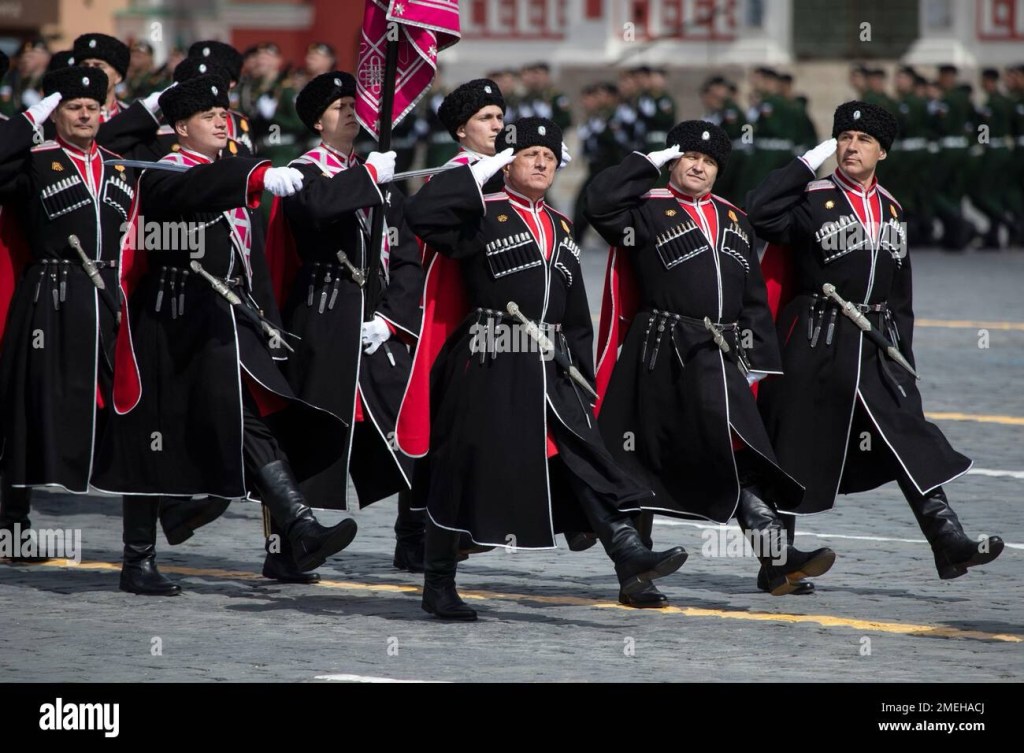
The newly elected far right president of Chile, Jose Antonio Kast, faces renewed criticism because of the fact that his father, a German immigrant, was a Nazi party member and officer. So what you may say; surely Kast does not need to face generational judgements because of the sins of his father?

That much is true, but this popular wisdom should not undermine our ability to ask the difficult questions. Providing sanctuary for refugees is a noble goal. It is one of the standards by which we evaluate the humaneness of a given society.

It is in this connection that we should explore the following juxtaposition; after World War 2, Cuba showed solidarity to black African nations fighting for their independence from colonialism. At the same time, the United States, Britain and other Anglophone nations provided sanctuary to ex-Nazis and their Eastern European collaborators fleeing justice.

Molly coddling ex-Nazis is not a practice specific to Latin American nations. The US, Canada and other Anglophone nations have a longstanding history of opening their borders to Nazis, white immigrants considered acceptable refugees. I have explored this topic at some length previously.

The subject of visiting the crimes of the parent on the children is something I have been wrestling with for decades. In 1993, former US President Bill Clinton nominated General John Shalikashvili (pronounced Sha-Lee-kash-vee-Lee) to be the chairman of the US Joinr Chiefs of Staff. That basically means the head honcho of the entire US armed forces.

It is always great to see the child of immigrants make it big in the US. What is interesting about this particular episode is that the general’s father, Dimitry Shalikashvili, was a member of the Georgian Legion, an ultranationalist Georgian unit under the operational command of the Nazi Waffen-SS. He fought in this unit as an officer, finding sanctuary in the United States at the conclusion of the world war.

There is no suggestion that Shalikashvili junior was a Nazi or member of the Ku Klux Klan. However, we must ask the obvious question; how did an officer in the Waffen-SS, an organisation proscribed by the Nuremberg trials as a criminal group, find refuge in the United States?

I have previously recounted how the US, Canada and other western nations turned away Jewish refugees fleeing Nazi persecution in Europe, but provided sanctuary for ex-Nazis after the end of the war. Rather than recycle the details of that long-ignored undercurrent of Cold War history, let’s focus on two important historical anniversaries which will help us understand the contrasting behaviours of the US and Cuba.

This year, November to be exact, marked the 50th anniversary of the Cuban intervention in Angola. The latter, a newly independent nation after the withdrawal of Portuguese troops, faced a relentless and covert war of terrorism waged by Angolan proxies of apartheid South Africa. If there was a racist regime in the world, it was the racially stratified society of apartheid South Africa.

Beginning in the 1970s, the South African (and American) backed National Union for the Total Independence of Angola (UNITA) waged a terrorist campaign to sabotage the newly won independence of that nation. It seemed like Angola would fall, and so the authorities asked for Cuban help.

Thousands of Cuban soldiers, fighting alongside their Angolan counterparts, drove the South African army out of Angola, and also from Namibia, another nation targeted by apartheid South Africa. This is an example of Cuba’s internationalism, helping to hasten the eventual demise of the apartheid regime in South Africa. The military defeat of the South African forces in Angola was a setback from which Pretoria never fully recovered.

Operation Carlota, as the Cuban mission was called, is fondly remembered until today as an example of interethnic solidarity.

Keep that in mind, as we explore another milestone. This year marked the 50th anniversary of the passing of Spain’s former military dictator, Generalissimo Francisco Franco. Hitler and Mussolini were both dead in 1945. Franco, whose regime came to power after a three year civil war, received substantial funding and military assistance from the Axis powers.

Franco stayed in power over the decades. Spain under his command sent 40 000 troops to fight alongside German forces in the Soviet Union; the so-called Blue Division. How did he remain in power for over 30 years?

There are many answers to that question, but one major reason is the support and international backing provided by the United States. The Cold War was on, and the US required allies in Western Europe. After the conclusion of WW2, there was a concerted effort in the US and Western Europe to rehabilitate Franco’s reputation.

He was regarded as a stable ruler, one who promoted a conservative national Catholicism. Indeed, the Nobel Prize winning novelist anti-Soviet Russian dissident Alexander Solzhenitsyn, led the charge to rehabilitate Franco’s reputation not as a pawn of the Axis powers, but as a staunch Catholic who ‘saved Spain from communism.’ How exactly he rescued Spain by killing thousands of his fellow Spaniards is never explained by Solzhenitsyn.

That is true as far as it goes, but it is only half the story. Franco’s regime advocated a vicious antisemitism, kept Republican prisoners in concentration camps, and his record of actively siding with Hitler was underplayed.

German U-boats refilled their tanks and replenished their stocks in Spanish ports. Texaco, the American oil company, provided information about the movements of Allied commercial shipping to Franco’s government. Rather than ‘keeping Spain out of the war’ as Franco’s apologists would have us believe, Nationalist Spain participated in the Nazi war effort. Leon Degrelle, a Belgian wartime Nazi collaborator, Waffen-SS officer and fugitive, found sanctuary in Franco’s Spain after 1945.

The purpose of juxtaposing these episodes is to cast a spotlight on little-known areas of modern history. We reveal our characters when we become known by the friends we keep.

Washington and London have used celebrity dissidents to push for regime change

What would you say about a person who keeps interviewing for a job opening that is never available? Over the decades, the Iranian version of a dauphin, Reza Pahlavi, has been doing just that. Offering his services to the regime change fanatics in the Washington Beltway (and Whitehall), he pops up whenever tensions escalate between Tehran and Washington.

That is the assessment of Reza Pahlavi, son of the last Shah and marionette for the US, of Anthony Anchetta in his informative article for Current Affairs magazine. He details the role of Washington’s willing puppets, usually migrants from countries targeted by the US and Britain for regime change.

I wrote about Venezuelan celebrity dissident Maria Corina Machado here, and her role as a puppet-in-waiting for the United States attack on her nation. Celebrity dissidents are a curious bunch; parroting the talking points of Washington and London, they place the interests of the Anglo-American financial oligarchy above those of their respective nations.

To be clear, the Pahlavis, the ex-Royal dynasty that ruled over Iran for decades, were placed in power through foreign interference. Indeed, Rena’s father and grandfather were selected as compliant agents by foreign powers. Britain in the case of granddaddy Reza Shah Pahlavi (who ruled from 1925 to 1941), the United States in the case of his son, Mohammed Reza Pahlavi Shah (ruling from 1941 to 1979).

The father, his authority reinforced in 1953 after an American and British backed coup d’état, relied on a secret police service – Savak – which earned a reputation for brutality. Interrogations were carried out using torture, rape and electric shocks. The Iranian monarchy was a solid ally of the US and Israel during the Shah’s tenure, and Iranian oil flowed easily into the hands of Anglo-American oil companies.

The 1979 revolution toppled the pro-American Pahlavi dynasty, and since then Tehran has been politically disobedient towards Washington and London. Reza Pahlavi has made a career out of denouncing the Tehran mullahs, hiding his regime change agenda behind a mask of secularism.

The Iranian opposition in exile, such as it is, is a fractious, squabbling, bickering collection of political groups. Their only unifying feature is hostility to the government of Tehran. The main preoccupation of the diaspora Iranian opposition is threatening each other with violence should any group deviate ever so slightly from the MAGA regime change policy.

Pahlavi himself visited Israel in 2023, under the watchful guidance of the then Israel intelligence minister Gila Gamliel. Pahlavi is continuing in the pro-Israeli footsteps of his father. That is interesting, because in early 2024, when an Islamic State offshoot carried out coordinated attacks inside Iran, Pahlavi was on hand to basically rationalise those bombings.

Exculpating the responsibility of an ISIS-affiliated group is an eye-opening exercise, given Washington’s unceasing rhetoric regarding the threat of terrorism.

Numerous articles have been written regarding the defeat of Iranian influence in Syria, following the toppling of the former Ba’athist government in that nation. Others much more knowledgeable than me have tackled this difficult topic. I cannot claim to provide superior knowledge or intelligence on such matters.

I can state however, that the new authorities in Damascus, the militants of Hayat Tahrir al-Sham (HTS), were deliberately cultivated and groomed for the task of regime change by London. Transforming the HTS organisation from terrorists to politicians is no mean feat, considering that HTS has its origins as an Al Qaeda and ISIS affiliate.

The HTS uprising against the former Syrian regime was successful; it is the modern-day Syrian equivalent of the Sudeten German uprising in the late 1930s in former Czechoslovakia. Both uprisings, organised and supported by a foreign power, relied on political forces that advocated a form of ideological extremism; takfiri jihadist fanaticism in Syria, fanatical pan-German racism in the Sudeten case.

Remember the evil dictator, Alexander Lukashenko, who has remained in power all these decades in the former Soviet republic of Belarus? He was on our television screens for quite some time in 2020, because he was going to be the next villainous ogre to be ousted in a Western backed regime change operation. Was there a Belarusian equivalent of Reza Pahlavi or Maria Corina Machado? A Belarusian politician singing the tune that Washington wants to hear?

You bet there was – entering the stage as the smiling face of the liberal opposition was Sviatlana Tsikhanouskaya, portrayed as a modern day Joan of Arc by the mouthpiece of American capitalism, the New York Times. Showered with money, political backing and fawning media coverage, she was the toast of London, Washington, Paris and other imperial capitals. She was going to overthrow the evil Lukashenko, removing a pro-Russian ally, and steer Belarus on a pro-Western course.

Unlike Hollywood movies, where every scene is scripted, choreographed and rehearsed, reality does not always go to plan. Her government in exile is collapsing, five years on from the heady days of 2020. Plagued by financial scandals, corruption, personality clashes, and even allegations of taking money from the Belarusian equivalent of the KGB, Sviatlana Tsikhanouskaya’s career as a regime change leader lies in tatters.

No longer the feted darling of the West, even former allies have abandoned her. Her United Transitional Cabinet could not even unite its constituent bickering factions, let alone masses of Belarusian voters. There is no schadenfreude at this lamentable, pathetic situation. We have to maintain a clear-eyed focus on the failings of yet another EU-US supported astroturf project.

Such a fiasco should compel us to re-examine our practice of using celebrity dissidents as proxies of Anglophone power. They do not have their countries’ best interests in mind, but rather view their lucrative careers as satraps within the Anglo-American fold as the ultimate priority.

Have you ever performed on stage or given a speech?

Have you ever performed on stage or given a speech?

My hands were shaking, and my voice cracking. I nervously began my speech to the audience. I was one of the founders of the school debating team – junior high school to be exact.

Debating

Every Friday evening, during school term, we would be pitted against another school’s debating team. We had one hour to prepare our arguments about a topic. The topics were varied every week.

I was shy at first, but gradually built up my confidence. My voice broke when I was around 14. The teaching faculty asked me to be a narrator, in the main chapel – it was a Catholic school. The new archbishop of the diocese was coming into town. A welcoming mass would be held for him. The entire student body, and teaching faculty, would be in attendance.

The parable of the ten virgins was chosen as the story to read out. I was the main narrator, and a number of girls were chosen to read out the female parts. I stepped up to the microphone; I could see all the faces, students, teachers, the smiling archbishop all looking at me.

Got through the first sentence. That’s done; then the next sentence, another one down. The words flowed, everyone read out their parts. I finished speaking in front of the entire school body and teaching faculty. I was 14.

Years later, I stepped up to another microphone. This was at a rally I helped to organise in support of refugees. The Australian government has had an official policy of mandatory detention for all unauthorised arrivals. Refugees have been locked up for years in offshore detention centres. It was time to speak up.

There were thousands of people all looking at me. This was in Perth, Western Australia, around the year 2000 or 2001. The town square was packed with people. That 14 year old boy, who found his courage to speak in front of the school, was now about 30 or 31. He found his courage again. Making the crowd laugh, I lightened the mood a bit, while discussing an important issue.

Do not be ashamed to speak up for what you believe in.

Chanting

No, not Gregorian or religious chanting, but calling out slogans at demonstrations. Chanting is a way to motivate the crowd, and also include them in a unifying message. I took the megaphone – ‘say it loud, say it clear, refugees are welcome here!’. The crowd repeated the chant.

All the multiple demonstrations I have attended, whether for refugees, Palestine, or the environment, chanting provided a sense of motivation, purpose and unified action. You are not alone, there are thousands who think and feel like you do. Chanting slogans provides a visible, concise message for all to hear.

I have said it before and I will say it again; if my fellow Australians object to boat people, well, have I got news for you. There is one boat person who brought millions of illegals in his wake; his name was Captain James Cook. He arrived illegally, and imposed his language, culture and values on the indigenous nations.

Raising the flag while climbing stairs

I have never sung on stage – except in Liverpool, England when myself and a couple of drunken Swedish tourists sang the Beatles song Yesterday at the hotel where the band started, but that does not count.

I have asthma, so I need to exercise. In Barangaroo, in Sydney’s CBD, there is a long set of steps, starting on Sussex street. Leading up a shear rock face wall to the top, it’s hundreds of steps. My legs feel like jelly.

I need something to keep me going. So I sing, out loud.

What do I sing?

You will not like this, but for marching, the song is ‘Die Fahne Hoch’, (Raise the Flag). It’s an old German song, and I have memorised the words in German. I am quite certain you know what that song is, and what it stands for – so do I. Es schau’n aufs Hakenkreuz voll hofnung schon millionen.

No, I am definitely not rehabilitating the song.

Singing out load while climbing hundreds of steps does make people turn around, looking at this strange man singing to himself. That is okay. After debating and public speaking, I am used to audiences. Marching songs keep me moving.

I had to overcome shyness, and a lack of self-confidence, to be a public speaker. You can as well.

ChatGPT actually slows down work as a writer/blogger

Amidst all the online chatter regarding the impact of AI, I can only contribute one point which initially may seem strange. The main claim of ChatGPT, and generative AI, is its remarkable speed. At the click of a button, any question you may have is answered nearly instantaneously by AI. Writing a paper? No problem; ChatGPT will generate a flawless essay in a matter of seconds.

My experience has been the exact opposite – ChatGPT slows down the writing/blogging process. Yes, you read that correctly. ChatGPT is an impediment to the writing/blogging process.

Let’s begin with a bit of background, so we can all understand what I am arguing. I grew up in the age before the internet, during a time when artificial intelligence was the stuff of science fiction. The latter can be quite useful, portraying a society (or dystopia) should existing scientific trends continue.

However, when science fiction becomes a recipe for obsessive technofixes, this is when we become trapped in our own delusions. The tech billionaires want us to fixate on technofixes, technological innovations that will allegedly solve our societal problems.

Technology is wonderful, contributing to all sorts of improvements in our lives. Longer and healthier lives, unraveling the mysteries of outer space, bringing species back from the brink of extinction – these are awesome accomplishments.

We must overcome the focus on the technofixes-plus-markets scenario promoted by the tech giants.

Ok, let’s get back to my school days. I distinctly remember the English teacher from senior high school, Ms Williams, putting me on the spot.

The subject of nuclear weapons and the possibility of thermonuclear war came up in class. I think we were discussing George Orwell’s 1984. We were sitting in a rectangular fashion, all of us facing the centre. The topic of whether or not Nazi Germany was developing an atomic weapon came up. Were they pursuing a nuclear programme? Were they close to building a bomb, or decades away? Did the US do the right thing by bombing Hiroshima and Nagasaki?

The teacher looked at me and said, ‘Rupen, you seem to know a lot about this subject, World War 2 and so on, what do you think? Was Germany building a nuclear weapon?’

I answered the question to the best of my abilities. After class ended, I was thinking about that episode. The teacher asked for my evaluation about an important topic. She saw me, all of 16 years old, as a subject matter expert. She asked in front of the whole class. I relied on books – and documentaries – to answer her question.

I had to separate science fiction from reality. What does that mean?

Nazi Wunderwaffen (wonder weapons) have been the subject of intense fascination since the end of World War 2. All the documentation, prototypes and military equipment of the Nazi war machine (at least, that which was not destroyed) was seized and studied by the Allied authorities. That included the Nazi nuclear program.

While the Nazi party had hundreds of military projects and proposed technological projects (involving thousands of civilian contractors), they were decades away from constructing a nuclear bomb. This is not to dismiss the German scientists as incompetents; far from it. As the Nazis were losing territory and resources, the capability of achieving a controlled nuclear chain reaction diminished.

There has been all sorts of speculation about the Wunderwaffen – prototypes of gigantic super tanks to anti-gravity flying saucers and UFOs. Occultism and Western fascination with esoteric spiritualism has melded with Nazi Germany, the latter associated with supernatural and mystical forces. Let us remember that the Nazi authorities did their best to promote occultism and pseudo-archaeology in their official policies.

What was a demonstrably successful super-duper weapon was the V-2 rocket, an early version of a cruise missile. Dubbed the vengeance weapon, this guided ballistic missile brought terror to the hearts of the Allies. Flying undetected and unable to be brought down by anti-aircraft systems, these rockets were technically the first human-made vehicles to reach outer space, just surpassing the Karman line of the Earth’s upper atmosphere.

They caused casualties in Britain, but the heaviest toll the V-2 rockets took was on the thousands of forced labourers, concentration camp inmates compelled to build them. Yes, the scientists and engineers designed them, but it was the thousands of concentration camp workers who died building them.

The V-2 scored spectacular successes, but did not change the course of the war.

ChatGPT is similar to the V-2 missile; a spectacular piece of technology that is initially impressive, but has a hidden human-environmental cost, a technofix that will not ultimately change the current course of our capitalist society.

There are increasing reports, and awareness of, the enormous ecological costs of the data centres which process our AI requests. Data centres are the unrecognised engines (or forced labourers) of the digital age. They consume vast amounts of electricity and require huge quantities of water to cool them down. That water cannot be replaced. Each ChatGPT essay requires a staggering amount of water to sustain the processing power of the data centre.

If AI can perform a statistical analysis of complex data sets, thus saving you time, that is great. If ChatGPT produces a greater return on investment (ROI) for your business, that is fantastic.

If you write an essay using ChatGPT, and submit that as part of a university course, think about what you have actually learned. If the tutor or instructor uses ChatGPT to evaluate your essay, does that mean they have actually understood what your paper?

If our educational experience is mediated by AI-driven exchanges, what happens to the meaning of a university education?

Open ChatGPT, and think of the topic you want to ask it. Type in your question and press Return. It will give you a wonderful answer. Is it correct? Is it hallucinating references or citations, which it is known to do?

You still need to edit and rewrite what it has produced. You still need to verify the content as correct. You still need to ensure that the essay says what you want to say. You could allocate all that time and energy towards creating your own work. So, close ChatGPT and write your own essay.

Artem Mikoyan designed an aircraft everyone wanted, and the envious imperialist nations wanted to steal its design

During my time in high school, I was told by my teachers that I was a brilliant student. No, I never got straight As in every subject, but I was good academically. This is where I discovered a side consequence of adolescent life – teenage jealousy. It worked on both sides of the equation – students who were considered less academically achieving were jealous of my ‘success’, and the top students were envious of a strong competitor.

One supposed ‘friend’, a gifted student, was a toxic influence always dismissing my accomplishments. I soon learned to be aware of envy. I thought about that topic for a long time. It is particularly relevant in relation to Soviet Armenian aviation designer and expert Artem Mikoyan (1905 – 1970’ You see, Mikoyan – and his lifelong friend and colleague Mikhail Gurevich (1893 – 1976) were the designers of the internationally renowned Migoyan supersonic fighting jets.

The MiG, as it has become popularly known, was and is the envy of the collective West. Mikoyan and his associates created an aircraft so technologically sophisticated, even the imperialist powers were impressed – and terrified. How was it possible that a Soviet Armenian aviation expert could come up with such a superior design? The jealousy of the West manifested itself in many ways. One of the indicators that the imperial powers were envious – they tried numerous times to steal a MiG to study its design.

The MiG is one of the most successful air fighter jets in the world. Copied and exported to multiple nations, the MiG has become the shorthand reference for Soviet and Russian fighter aircraft. Until today, nations such as India, China, North Korea, Vietnam, Iraq – still the MiG design.

The Soviet-originated Russian aerospace corporation is called the Mikoyan – out of respect to its founders. It is the successor to the Soviet-era Mikoyan-Gurevich Design Bureau. Aeronautical engineers, such as Mikoyan, worked for state-run engineering bureaus in Soviet times. Production was tightly controlled and monitored by the Moscow authorities.

We are taught in the West that government-run industries are inefficient, woefully bureaucratic and stifle innovation. Only the private sector can generate the kind of continuous improvement required to be successful – is not that so?

How did Mikoyan become so globally successful? This question was foremost on the minds of Washington and London policymakers. A number of capitalist nations, such as Israel, came up with a solution – entice military pilots to defect from Eastern bloc nations, and from Soviet-aligned countries, thus stealing a MiG and scoring a propaganda coup in the process.

Cold War defectors, particularly aviators, were hailed as heroes in the Anglophone nations. Here was proof that the pull of individual freedom, entrepreneurship and McDonalds was so strong, courageous individuals in the Communist East would risk life and limb to be free. I also watched Sean Connery in that movie (The Hunt for Red October, I think) cooperate with CIA agent Jack Ryan for the supreme goal of defecting and reaching the West.

That story is fictional, although the part about cooperating with the CIA contains an element of truth. Acquiring information about the MiG aircraft was a top priority for the Israeli government in the 1950s and 60s. Numerous Arab states had obtained MiG aircraft to beef up their air defences. The Israeli intelligence agency, Mossad, went into overdrive to bribe, blackmail and entice Arab military aviators to defect.

In 1966, Israel secured a propaganda victory, convincing Iraqi military pilot Captain Munir Redfa to defect, bringing his MiG-21 fighter plane with him. Now Israel and its western allies had a feared MiG in their hands, to be closely studied. The heroic exploits of Captain Redfa made for good television. A Soviet-aligned Iraq lost one of its highly trained pilots to Israel.

Munir Redfa, an Assyrian Christian, was lured by bribes, threats and prospective rewards of a high paying job, should he agree to defect. Mossad had tried in the 1950s to coax Egyptian pilots to defect, without any success. Iraq, at times a Soviet ally, and then changing sides after military coups, proved to have an unstable political climate, that is until the rise of a CIA friendly Iraqi officer called Saddam Hussein.

There were instances of Iraqi pilots refusing to defect, and they ended up assassinated under mysterious circumstances. Captain Redfa, approached by female Mossad agents, proved to be compliant. He traveled to Europe and Israel, meeting with high-level Israeli military commanders, organising the flight path he would take.

Redfa flew his MiG to Israel in August 1966. It is easy to be an ideological hero when your path is smoothed out by a foreign intelligence agency. The sordid details of his Mossad-facilitated defection were conveniently omitted from his media-friendly story of individual courage.

Mikoyan passed away in December 1970. This month is the 55th anniversary of his death. The person is long gone, but his design and handiwork live on in the hearts and minds of aircraft engineers and enthusiasts around the world.

Name your top three pet peeves

Name your top three pet peeves.

The promotion of a propagandist for imperial power under the cover of diversity – major pet peeve.

What does this mean?

We all welcome cultural diversity on the television, in the media and in film. Increasing the representation of people from non-English speaking backgrounds (NESB), persons with disabilities, transgender and LGBTQI+ communities – that is all well and good. With all due respect to Chris Hemsworth, Kylie Minogue, Margo Robbie, Paul Hogan – enough of seeing Australians as only white-skinned, blonde haired people.

It is refreshing to see a hijab-wearing Muslim woman on the television, voicing her opinions. If the topic about which she is speaking is the Middle East, the issue of Islam, the Israel-Palestine conflict, that is great. Finally, people of Arab/Islamic background are getting time on our television screens to express their opinions.

When that person is Fatema Al-Arabi, then it is time to question whether it is respect for cultural diversity that earns her media exposure. You see, Al Arabi is an employee (in Bahrain) of several organisations with ties to Israeli military intelligence. She has promoted the Zionist side of the Israel-Palestine conflict. Her opinions about the Palestinians, and Arabs in general, perfectly align with the misinformation talking points advocated by the Israeli government.

It is not wrong to have an opinion that differs from the Palestinians. However, when you are employed by organisations that have intimate links with an intelligence service (in this case, Israeli), you stop being a journalist and become a paid propagandist. This exercise is couched in the seemingly innocuous motivation of respect for cultural diversity. Are you not in favour of seeing marginalised groups on the television?

Please do not disguise imperialist, pro-genocide propaganda as a harmless, even positive, advocacy of cultural diversity.

The claim that generative AI is a word calculator – this is highly misleading and patently false.

I am quite certain that all of us use a calculator to do basic maths. Who wants to do long division manually? Calculators save us time and mental energy performing basic arithmetic. Surely, generative AI is a word calculator? No, it is not.

Generative AI hallucinates, invents sources and citations, recycles the simulation so it becomes our reality. Amazon – be honest, that word made you think of the tech company, not the gigantic river in South America. AI collects our data, targets us with advertising, shapes and influences our ethical dilemmas. Learning with AI produces shallower outcomes than traditionally face-to-face learning.

If you type 6 * 6 into a calculator, and you see the result 25, you stop and think to yourself, what’s gone wrong? Did I mistype? You still have to know how to multiply. Calculators did not require the construction of huge data centres, consuming vast amounts of electricity and water.

Calculators did not create an anarchic race between companies to produce the most effective super efficient gadget. The anarchic AI race, while consuming ever larger amounts of natural resources, is also one gigantic circular financial bubble. True, there have been bubbles before. The AI bubble, when it bursts, will see billions go down the drain.

Pete Hegseth; you are the defence secretary, not the war secretary, no matter how many times you call yourself that.

Hegseth has rechristened himself the secretary for war, even though no-one in the Congress has actually authorised that particular change in function. He remains the defence secretary, despite his own delusions of grandeur. He gave a speech to 800 top US generals earlier this year, in which he exhorted the military to be more ‘manly’. Lose weight, shave the beards, do push-ups, and get ready for war.

I am not a military expert, but I can unequivocally state – wars are not won by the side with the largest hulking biceps. If you think you will be more ‘manly’ by building up your biceps until you resemble Schwarzenegger, that is your decision. However, being ‘masculine’ does not win wars. Hegseth has been watching too many Hollywood movies, and has fooled himself into believing that ‘manly men’ go out and kill.

In World War 2, the Soviet Union did not win because their soldiers, being ‘manly men’, flexed their superior biceps thus terrifying their German opponents. The Soviets organised their economic production to sustain themselves throughout war-imposed privations. They continued to develop their technology, surpassing their German enemies.

The Nazi leadership, having written off the Russians and other Soviet nationalities as ‘subhuman’, were shocked that the Soviet military was capable of startling innovations. The hubris of the Nazi side was the seed of their own undoing.

Having a non-woke military, if that is what you want, is all well and good. Being ‘manly men’ will do nothing to confront the fact that Russia is currently winning the war in Ukraine. Not only have sanctions failed to undermine the Russian economy, Moscow’s ability to militarily outproduce the NATO powers is plain for all to see. Another infusion of millions of euros, or another batch of missiles to Kyiv, is not going to change the outcome.

Both the collective West and Moscow quickly adopted Unmanned Aerial Vehicles (UAV)s as crucial instruments of warfare. Moscow has revolutionised drone doctrine, and has created an entire branch of its military dedicated to drones. Even the major corporate media are admitting that Moscow has achieved remarkable success in drone warfare. All the bulging biceps in the world are not going to change that.

So, Mr Hegseth, if you want to deceive yourself that hulking muscles will win wars, no-one can stop you. Please, stop asking the rest of us to share your hallucinations.

David Irving’s misfortune – being mature enough to choose when to feel schadenfreude

Schadenfreude is a German word which has no direct translation into the English language. It means the joy felt at another person’s misfortune. Do not feel guilty about it; it stems from our deep seated instincts. We all experience it when, for instance, an obnoxious loudmouthed braggart sportsperson who is humbled after being defeated by an underrated opponent.

In 1990, when heavyweight boxing contender James ‘Buster’ Douglas achieved an upset victory over the previously invincible and seemingly indestructible Mike Tyson, there was schadenfreude. The arrogant work colleague who constantly interrupts you, lording their ideas over yours, finally stumbles badly in a meeting and gets corrected – there is schadenfreude.

In 2018, when egomaniacal mixed martial arts fighter Conor McGregor was resoundingly beaten to a pulp by his opponent Khabib Nurmagomedov, there was an overwhelming feeling of schadenfreude.

We also have to be aware of when and where schadenfreude is appropriate and when it is not. 25 years ago, I experienced schadenfreude when David Irving lost his libel case. He sued Penguin Publishers and American academic Deborah Lipstadt for libel. He lost. That was a fantastic victory. Today, when I see David Irving’s condition, there is no schadenfreude.

David Irving has spent his writing career as a Holocaust denier and Nazi apologist. His books minimise and whitewash the guilt of the Nazi regime. His speeches, delivered to gatherings of neo-Nazis and far rightists in Britain and Germany, have sought to rehabilitate the doctrines of Nazism and the ultranationalist Right. In his most famous book, Hitler’s War, he strives to maintain the innocence of the Fuhrer, claiming Hitler had no knowledge of the Holocaust; if the latter took place at all.

In 1963, he published The Destruction of Dresden, focusing on the Allied aerial carpet bombing of that city. The book covered the terrible destruction of the city’s infrastructure and historical assets. However, Irving exaggerated the death toll, and portrayed the Allies as sadistic killers; a portrayal popular among German postwar ultranationalist circles and those attempting to lessen the guilt of the Nazi regime.

In 1968, he published a controversial book The Destruction of Convoy PQ-17. The incident he covered refers to a melancholy story of a British navy Arctic convoy destroyed by enemy forces. Without going into all the details here, it was the first large combined Anglo-American naval operation in the Arctic. Its destruction by German forces has been extensively investigated. 153 merchant seamen were killed.

Irving exploited this tragedy, writing a book that put the boot into senior escort commander Jack Broome. The latter sued Irving for libel and won the case – Irving was ordered to pay 40 000 pounds in damages.

He has craved recognition as a legitimate historian. In the 1990s, he made multiple ‘challenges’ to historians, stating he would willingly hand over thousands of pounds to any historian who could produce a single piece of paper ordering the Holocaust with Hitler’s signature. He knew that no such piece of paper existed, but his stunt was intended to garner more publicity for himself as a legitimate academic simply asking the establishment uncomfortable questions.

In 1993, Deborah Lipstadt, a professor of history, published a book about Holocaust denial, its causes, agenda and main players. In it, she described Irving as a Holocaust denier, antisemite and pro-Nazi. That was like waving a red rag to a bull. Irving, in 1996, launched libel proceedings against Lipstadt and Penguin Publishers.

The case went to trial in 2000 – Irving lost. The judge ruled that Irving indeed was a Holocaust denier, antisemite and a Nazi apologist. I wrote about that case and the issues raised by it in a previous article.

Combating Holocaust denial may seem like a purely academic exercise, but there are political implications in leaving it unchallenged. The Nazi regime, and its murderous collaborators in Eastern Europe, have their defenders and apologists today. Irving’s efforts, while maintaining a veneer of scholarly respectability, contributed to the rewriting of modern history, rehabilitating the doctrines of the ultranationalist regimes.

25 years after that trial, Irving is today a shell of a man. In deteriorating health since 2023, he requires round-the-clock supervision and care. A once proud, egoistic man is now completely dependent on others, experiencing physical and cognitive decline. There are no tears for Irving, I still condemn and deplore his ideology. But now is not the time for schadenfreude. His health is frail, his mind weakened – he cannot defend himself anymore.

There is no schadenfreude at his pitiable condition. I was raised never to gloat or feel joy at another person’s health decline. On the contrary, it is sad; no, I am not going to start a GoFundMe campaign for Irving’s medical bills. It is sad to see an otherwise active writer unable to fend for himself anymore (Yes, Irving is male and in his late 80s). As much as I pride myself on having debated and combated Holocaust denial and its associated ultranationalist effort at obfuscation, I cannot feel any glee at his condition.

No, there is no pity for the man who described Auschwitz and Treblinka as ‘tourist attractions’, but I cannot be happy about his current misfortune either.

Today, in France and Spain, there are ultranationalist parties and writers who are actively defending and rehabilitating the fascist regimes of Francisco Franco in Spain, and the Nazi-collaborationist Vichy government in wartime France. Let’s focus our energies on combating these particular manifestations of historical revisionism and the rehabilitation of far right doctrines. Leave David Irving where he is.

Foreign words in the English language, the Sudeten question, and the expulsion of Germans from Eastern Europe after World War 2

There are numerous German words which have made their way into the English language. The English vocabulary consists of a hodgepodge of words from other languages, to be sure. However, there are German-origin words which we use everyday in English; kindergarten, sauerkraut, poltergeist (noisy ghost), schadenfreude (joy from the misfortune of others), zeitgeist (spirit of the times), uber, Neanderthal – the list goes on.

Eighty years after the end of World War 2, let’s take the opportunity to learn some more German words. Why? Because the following words denote events and concepts that have reverberated down the decades. Let’s examine one momentous consequence of WW2, a measure carried out by the victorious Allies; the mass expulsion of German communities from Eastern European nations, particularly Czechoslovakia, over the years 1944 – 1950.

German communities had resided in Eastern Europe for centuries. In the immediate aftermath of the war, ethnic Germans who had largely collaborated with the occupying Nazi forces were forcibly expelled. The most famous (or infamous) example of mass deportation of Germans was carried out by the Czechoslovak authorities in 1945-48. The Sudeten Germans who had contributed to the breakup, and eventual Nazi occupation of Czechoslovakia, were deported by Czech President Edvard Beneš.

Was this mass deportation an instance of intentional ethnic cleansing? Collective revenge by previously oppressed people against their former tormentors? There is a brief answer to these questions – both of them consist of the word No.

This was not ethnic cleansing, nor did it involve purely vengeful motives. Were there cases of revenge? To be certain, yes. Former victims of Nazi atrocities rose up to right the wrongs inflicted upon them. Was this mass revenge on a collective scale? No, it was not. It was an instance of holding perpetrator communities to account for their crimes. I cannot say that these mass expulsions were one hundred percent correct; but I cannot condemn them either.

There was anti-German sentiment at the conclusion of the war. The enormity of Nazi crimes was only just beginning to be understood and publicised to the international community.

In examining these questions and more, we will learn some more German words, terms with specific political and racial meanings.

Germans had settled in central and Eastern Europe through the centuries. For instance, in the 1700s, Russian Empress Catherine II (the Great) invited Germans to settle and farm in the Volga region of the Russian empire. Catherine herself was actually of German descent, not Russian.

At the conclusion of World War One, a defeated German nation lost territories in Eastern Europe. According to the 1919 Versailles Treaty, boundaries were redrawn, creating newly independent Eastern European states, such as Poland and Czechoslovakia. German communities found themselves citizens of these new states, ethnic minorities in newly emergent nations.

Earlier, I mentioned how German words have crept into the English language. Here is another; Volk. Roughly translated as ‘folk’, Pan-German nationalists defined the Volk as a national community. Later far right thinkers, and Nazi party ideologues, defined Volk as a racial community, based on blood and soil. The purity of the German bloodline and the cultivation of the soil were the bedrock of a new Völkisch movement.

Constructing a racial ethnic community based upon an agrarian nationalism, the Nazi party advocated that ethnic Germans in Eastern Europe were part of the one Volk. The Germans living within the borders of Czechoslovakia, renamed Sudeten Germans after the Sudeten mountains, were turned into a wing of Nazi ultranationalist ideology. There were German communities outside of the Sudeten region as well.

Sudeten Germans organised pro-Nazi paramilitary groups, agitated for the secession of Sudeten German communities and their annexation by Nazi Germany. Weakening and undermining the interwar Czechoslovak state, they benefited materially from Nazi German support. Sudeten German organisations, secretly funded by Berlin, defied the Czechoslovak authorities, blocking Czech police, and removing the border crossings between Germany and the Sudeten region.

When Jewish properties were confiscated, they were awarded to ethnic Germans. The latter moved beyond silent acquiescence to Nazi occupation. They informed the Gestapo where Jewish families were hiding. They actively spread Nazi propaganda in the nations they resided. Sudeten Germans helped to conduct terrorist operations deep into Czechoslovak territory, helping to break up that nation thus facilitating its takeover by Nazi Germany.

Indeed, German communities in Eastern Europe were transformed into Volksdeutdche (Germans outside the borders of Germany), ideological and paramilitary battering rams for Nazi expansionism in Eastern Europe. When German troops occupied the Polish city of Łódź, the Volksdeutsche were on hand to facilitate their entry; and they gave the Nazi salute.

At the Potsdam Allied conference in 1945, the great powers agreed with the proposals of the Czechoslovak and Polish governments in exile to expel the German population of Eastern Europe. The restored President of Czechoslovakia, Edvard Beneš, proceeded to implement the plan of forcibly expelling ethnic Germans.

A brutal policy to be sure, one that resulted in the deaths of thousands of Germans from numerous causes. Malnutrition, disease, forcible marching, internment – no sugarcoating the harshness of the expulsions. Let’s not turn the perpetrators into victims – the Germans in Poland, Czechoslovakia and so on were genocide enablers. They were active accomplices to Nazi atrocities.

For instance, the Czechoslovak authorities in the city of Brno forced 20 000 ethnic Germans to march to the border with Austria. 1700 people died.

During the interwar years, Poland forcibly transferred 15 000 Germans from their western borders to further east. Concerned about the dubious loyalty of ethnic Germans, they had witnessed the collective treason of the Sudeten Germans in Czechoslovakia. The same logic motivated Moscow’s decision to forcibly relocate the Volga Germans in 1941, as Nazi Germany invaded.

These are emotionally charged issues, and there is no denying their brutality. However, we should not be cynically manipulated into condemning them outright either. There are those who are utterly convinced of the righteousness of the Volksdeutsche, and that is that. I am certain there are many shades of accomodation, acquiescence and complicity. These nuances are not an excuse to overlook the guilt of the Volksdeutsche.

The internationally renowned lawyer, Alfred-Maurice de Zayas, has taken up the cause of the postwar German expellees. Prior to his books on the subject, the only work highlighting the expulsion of Sudeten Germans was by longtime Holocaust denier and Nazi apologist German American writer Austin App (1902 – 84).

Holocaust deniers like App cynically appropriated the plight of the German expellees to minimise the guilt of the Nazi regime. The old tactic of ‘what you did was just as bad’ was a way of Holocaust deniers to neutralise any ethical or moral guilt the German nation held in the aftermath of the war.

No, De Zayas is definitely not a Holocaust denier or Nazi apologist. His characterisation of the German expellees as victims of ethnic cleansing demonstrates that he has allowed his personal feelings to interfere with his professional judgement. That happens because we are all human, subject to the same emotions which underpin our common humanity.

The Volksdeutsche dedicated themselves to an ideology that undermined our common humanity, and made one nationality mistreat and brutalise other nationalities as subhuman. For that, they should be held accountable.

Jane Goodall, animal cognition, and recognition for Félicette the Astrocat

Let’s start by meeting Ken Allen. He was incredibly adept at his job, and led a peaceful life. Liked and respected by his local community, he achieved fame as an escape artist, demonstrating forward thinking skills and dexterity. Even as an adolescent, Ken displayed the aptitude with mechanical skills that would serve him well as an adult. Admired by his fans, he passed away in 2000 at the young age of 29.

Oh, and I forgot to mention, Ken Allen was not a person, he was a Bornean orangutan. Dubbed the ‘Hairy Houdini’ by the local media, Ken escaped captivity from San Diego zoo nine times from 1985 till the late 1990s. After climbing what were thought to be escape-proof walls, he would wander around the zoo like a tourist.

He was never aggressive or violent towards any human or animal. Well, just once, when he threw rocks at another orangutan Otis, the latter known to be obnoxious and unpleasant to other animals and humans. Zookeepers were constantly amazed at Ken Allen’s ingenuity. He could unscrew bolts, remember the location of pathways to follow, and even enlisted the support of other orangutans.

The zoo authorities provided Ken with three females, hoping to divert Ken’s energies from wanderlust to just plain sexual lust. They were wrong. One of his female companions found a crowbar left behind by a zoo worker; she opened a window and Ken climbed through it in yet another escape.

Zoo keepers went ‘undercover’, posing as tourists in the hopes of finding out how exactly Ken was escaping. The other orangutans, and Ken, spotted the zoo agents. Lulling them into a false sense of security, Ken would stage elaborate wall climbing ‘escape attempts’, thus fooling the zoo agents to relax their guard. Ken, increasingly aided and abetted by orangutan accomplices, would carry out the real escape days later.

Sadly, Ken was diagnosed with a type of cancer – lymphoma – and euthanised in 2000. His exploits as an escape artist provide us with an interesting insight into animal cognition. Can our primate cousins understand the world the way we do? Certainly Ken demonstrated a level of planning, tool use and perception sophisticated enough to outsmart the San Diego zoo authorities.

Jane Goodall (1934 – 2025), the English primatologist, passed away in October this year. Multiple commentaries have elaborated her astonishing career and accomplishments as a scientist, a woman in a male-dominated field. Let’s highlight a few of the ways she made us rethink our relationship with primates.

Rather than mindless, brutish simpletons, our primate cousins display in basic form the emotional and social complexities that humans navigate every day. For instance, chimpanzees and gorillas have used tools, experience emotional states, and form webs of interrelationships. Goodall made us consider the emotional and social lives of primates, even in their embryonic form. We can see them demonstrate what we regard as intelligence.

Animal cognition is not the exclusive preserve of primates; there is a growing and extensive body of literature documenting and exploring the realm of cephalopod intelligence. Cephalopods are a class of marine animals which include squid, cuttlefish and octopus. The latter, a marine invertebrate, seems like an unusual candidate for the study of animal cognition. Yet, there are numerous documentary specials and biological studies examining the remarkable smarts of the octopus.

The octopus not only has eight tentacles, but nine brains. These brains, rather than located in one spot, operate as a distributed network of information gathering and processing centres. Octopuses are known to have used coconut shells as protection from predators, even using corals as a defensive shield. In captivity, they have been observed opening jar lids to extract food, even escaping through gaps in the water pipes, swimming hundreds of metres to an open ocean.

The octopus, unlike other molluscs, lost its protective shell millions of years ago. Without it, the soft flesh of the octopus became vulnerable to predators. Compensating for this loss, the octopus had to rely on developing street smarts, so to speak, outmanoeuvring its hunters. The octopus did have defence mechanisms before it lost its shell, to be certain. But that crucial change provided an enormous boost to the development of cephalopod intelligence.

While being solitary creatures, octopuses display moods and emotional reactions – hiding under rocks being shy, but also curious and attempting interactions with observers or objects in their vicinity.

We cannot conclude our exploration into the world of animal cognition without paying our respects to C341 – the number assigned to Félicette, the first cat to survive a journey into space. Long forgotten in the rough and tumble Cold War competition for spaceflight supremacy, Félicette was a stray cat launched into space by the French authorities in 1963.

From the 1950s onwards, scientists wanted to study the effects of space travel and cosmic radiation on living organisms. Both the US and USSR had sent mammals on cosmic journeys; the most famous was that of Laika the dog in 1957.

Launched into space on Sputnik-2 by the Soviets, she became world famous for this mission. However, at that time, there was no technology for reentry to Earth. The Moscow space scientists knew that Laika’s first voyage would be her last. She died in space.

Félicette was one of 13 stray cats recruited into the French space medicine agency, the Centre d’Enseignement et de Recherches de Médecine Aéronautique (CERMA). Passing a rigorous training programme, Félicette was selected to be the first cat launched by France into space.

The mission was launched from the Sahara, French Algeria in October 1963. Félicette passed the Karman line, the technical boundary between the upper reaches of the Earth’s atmosphere and outer space. Lasting 15 minutes, Félicette spent a longer time in space than Katy Perry and her glitzy friends.

Scientists back on Earth were monitoring the cat’s heart rate, breathing and other vitals through electrodes implanted in her body. The capsule carrying Félicette detached from the rocket, and parachuted safely back to Earth. She had made history for the French space programme.

A few months after she completed her mission, Félicette was euthanised so the scientists could examine her brain for any impact from cosmic radiation. What they learned from the autopsy is exactly nothing. She was gone, and forgotten – well, not quite.

In 2019, a bronze statue of the intrepid feline was unveiled at the International Space University near Strasbourg, France. It depicts sitting atop the Earth. She takes her place among the other animals sacrificed for space exploration.

Studying animal cognition and behaviour will hopefully lead to a better understanding of ourselves, our relationship with the natural world, an equip us with the skills to comprehend the subjective experience of our animal relatives.

The lessons of the Holocaust, the Nuremberg trials and the violence against the Gaza Palestinians today

This month, 80 years ago, the Nuremberg trials began. What were they and why are they important as a starting point for the current article? In brief, the trials were a series of international military tribunals formed for the express purpose of prosecuting the top Nazi German politicians, military commanders and economic leaders for the crimes they committed in pursuit of aggressive predatory warfare.

The victorious allies – the US, Britain, France and the USSR – agreed to form a tribunal, assembling irrefutable evidence of Nazi atrocities, such as the extermination of European Jews, exploiting forced labour in concentration camps, and systematic violence directed at civilian populations. Indictments were filed against the main Nazi defendants in October 1945, and trial itself commenced in November.

The network of concentration camps established by the Nazi hierarchy was extensively documented, and its inner workings were elaborated in full detail. The horrific nature of these camps constituted a powerful indictment of Nazi atrocities.

Let us now examine an irony of history.

In 1945, British soldiers, among others, helped to liberate the Bergen-Belsen concentration camp complex in northern Germany. Originally a prisoner of war camp, it was expanded during the war to accommodate civilian prisoners. The full horrors of the place, the use of forced labour, mass starvation of prisoners, the sadistic beatings of inmates by SS guards, were publicised to highlight the crimes of the Nazis.

Only a few years after that, the British military and colonial authorities in Kenya, established a nation-wide network of internment camps, where Kenyans were held without trial, subjected to inhumane torture, and used as forced labour.

The British military was waging an anticolonial counterinsurgency against the Kikuyu nation, and its military wing, the Mau Mau. The English took civilians as hostages, a practice that had been condemned as a crime against humanity at the Nuremberg trials.

In our own times, the genocidal violence inflicted by the Israeli military on the Palestinians, and the US invasion of Iraq in 2003, constitute grievous crimes against humanity. Millions were killed and displaced, and many more Iraqis and Palestinians are still suffering. The perpetrators of these crimes, the politicians whose decisions led to these criminal actions, remain free and unaccountable.

Multiple human rights and nongovernmental organisations are explicitly stating that Israel’s actions in Gaza constitute genocide. I am not making this up; no, I am not motivated by a homicidal antisemitism. Numerous scholarly and mainstream organisations, such as Amnesty International, Doctors Without Borders, (Medicins sans Frontieres) are all collecting evidence that the Israeli government, and its military forces, are guilty of genocide in Palestine.

Omer Bartov, a professor of Holocaust and genocide studies and former Israeli military officer, arrives at the inescapable conclusion that Israel is committing genocide. His article ‘I’m a Genocide Scholar. I Know It When I See It’ is worth reading in its entirety.

We should always be cautious when applying serious terms, like the word genocide, to a given situation. There is no disputing the unspeakable horrors of the Holocaust. The immediate results of the 1945-46 Nuremberg trials were to establish a framework of international laws and rules by which all states (and nonstate forces for that matter) must comply when dealing with each other, and their respective populations.

We must continue to teach the lessons of the Holocaust, so that future generations never forget. The phrase Never Again is certainly one way of sensitising ourselves against those who would repeat the crimes of the past.

The Nuremberg trials, and the subsequent Nuremberg proceedings, established a precedent where individual military officers, politicians, and businesspeople could be held to account for crimes against humanity.

The subsequent Nuremberg trials, held by the International Military Tribunal, prosecuted second-level Nazis, and those in the wider business community who assisted and actively participated in the commission of crimes against humanity. For instance, one of those trials – out of a series of twelve – charged German doctors and administrators with conducting inhumane medical experiments on concentration camp inmates, without their consent.

One of the main defendants at the original Nuremberg trials with Arthur Seyss-Inquart (1892 – 1946), an Austrian-born Nazi and Reichskommisar (Reich commissioner) of German-occupied Netherlands. He was basically the governor of the Netherlands for Germany. When the Dutch resisted his rule, he cut off the supply of food and coal (the latter used for fuel) as collective punishment.

The 1944-45 winter is known as the Hunger Winter. Intentionally starving large portions of the Netherlands, thousands died of malnutrition and freezing. The effects of this human-made famine are still examined by medical professionals and historians today. Dutch authorities commemorate – if that is the right word – that particularly painful chapter in their nation’s history out of respect to the victims.

Seyss-Inquart was convicted of crimes against humanity, sentenced to death and hanged in 1946.

The BBC, hardly a bastion of leftist propaganda, published an article in August this year detailing how Israel’s actions have resulted in a human-induced famine in Gaza. Citing spiralling rates of child malnutrition and poverty, the situation for the Palestinians is dire. Who are the Israeli politicians and military commanders responsible for this crime? Who are the Israeli equivalents of Seyss-Inquart?

Let us perform a revealing comparison when it comes to the treatment of genocide. This examination owes its origin to Caitlin Johnstone, a political writer. There is no shortage of condemnations of the genocidal atrocities committed by the Sudanese Rapid Support Forces (RSF). The massacres carried out by this murderous militia are plain for all the world to see.

The United Arab Emirates (UAE) is a major funder and military ally of the RSF. The UAE receives extensive financial and military backing from the United States. Numerous American politicians have been able to draw the dots – the US is complicit in the genocidal actions of the Darfur-based paramilitary group.

No-one has lost their job because they denounced the RSF. No-one been canceled or silenced for speaking out about the genocidal RSF. No-one has faced an army of online trolls, hysterically accusing the anti-genocide voices of being hateful, or propaganda tools of a foreign power, or apologists for racial hatred.

Yet pro-Palestine advocates face precisely that kind of sustained, organised political pressure. And there are academics who have lost their jobs for speaking up about Palestine.

The state that claims to be the inheritor of the victims of the Holocaust has been misusing and repurposing the memory of the dead to insulate itself from any and all criticism. If the phrase Never Again is to have any meaning and relevance today, it must be applicable to all victims of genocide, including the Palestinians.